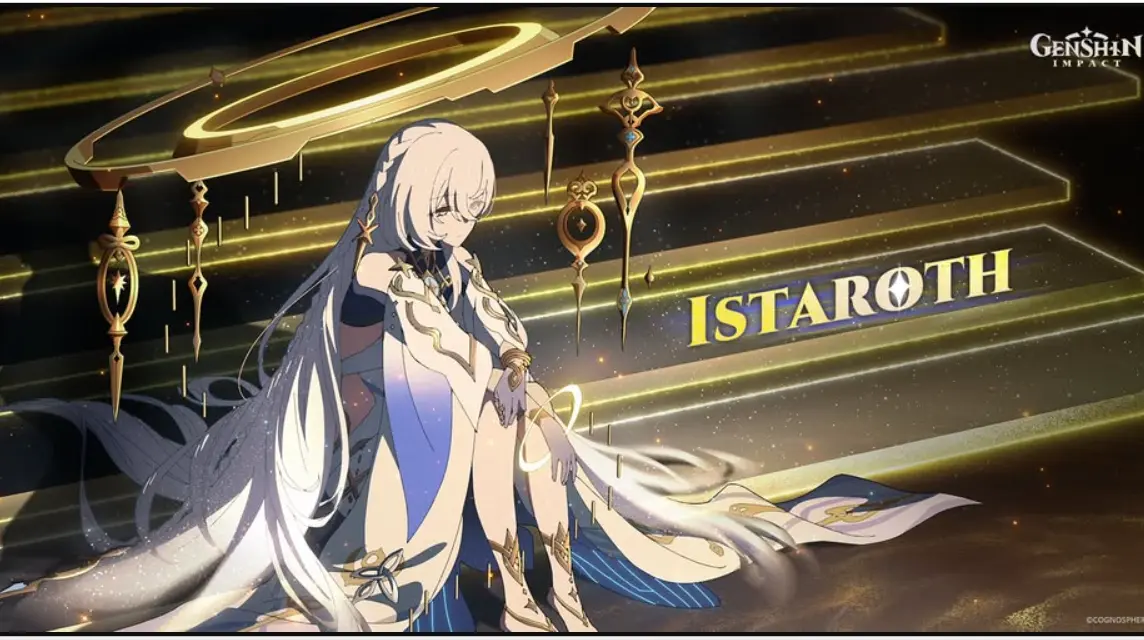
- Istaroth is The Lord of Time, worshipped in Mondstadt, Enkanomiya, and Nod-Krai, but almost forgotten in Teyvat.
- Historical rolenya: gives shards of power to Barbatos and write the world's memories as the "wind of time".
- Relicsit is seen in the ritual Enkanomiya and related statues in Inazuma, unlocking the mystery of the future story.
Get to know who Istaroth is and his legacy in Genshin Impact
In the main story Genshin Impact, this game is set in a world called Teyvat and ruled by seven Gods or Archons.
Apart from the Archons who influence the world of Teyvat, it turns out that there are other characters who are stronger and more influential than them.
And one of them is Istaroth. But until now the players Genshin Impact don't know his whereabouts yet.
While there's still little to know about Istaroth in Genshin Impact, we've rounded it up for you.
Let's take a look at the following explanation to find out who Istaroth is in Genshin Impact!
Also read:
- Durin's Story and Material Build in Genshin Impact
- Lakelight Lily Genshin Impact: Location, Farming & Quick Tips
- Talent and Ascension Materials for Lauma in Genshin Impact
Who is Istaroth in Genshin Impact?
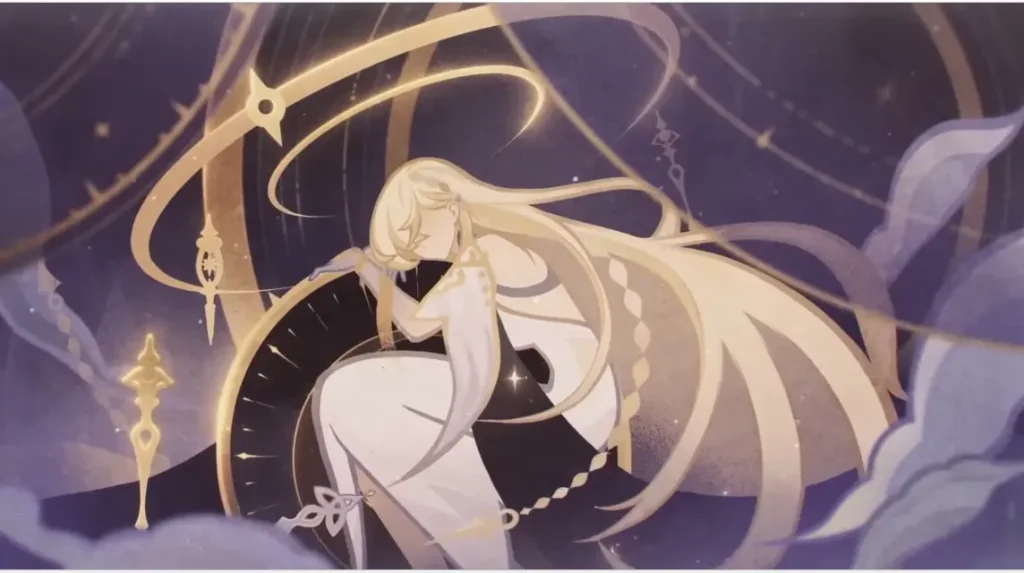
Istaroth is also known as Tokoyo Ookami, and is known to the Frostmoon Scions as Laimelea. She is the Lord of Time among the Four Heavenly Principle Shadows.
He is worshipped in Mondstadt, Enkanomiya, and Nod-Krai, both before and at the same time as the emergence of the Seven Gods.
However, the worship of Istaroth or even knowledge of his existence is almost completely forgotten in Teyvat, though his legacy is subtly preserved through phrases related to the “winds of time.”
The people of Enkanomiya continued to worship him even after their island sank beneath the surface of the earth, considering him to be the only one who did not abandon them.
However, this worship faded after the appearance of Orobashi, and disappeared completely after moving to Watatsumi Island.
In the real world, the name Istaroth is taken from Astaroth, who is the Grand Duke of Hell.
According to the Demonic Paradise Wiki, the God of Time is working together with Barbatos, the Anemo God of Mondstadt.
Both of these gods were also closely associated with Baal/Beelzebub, indicating a complex relationship between them.
Istaroth's Appearance
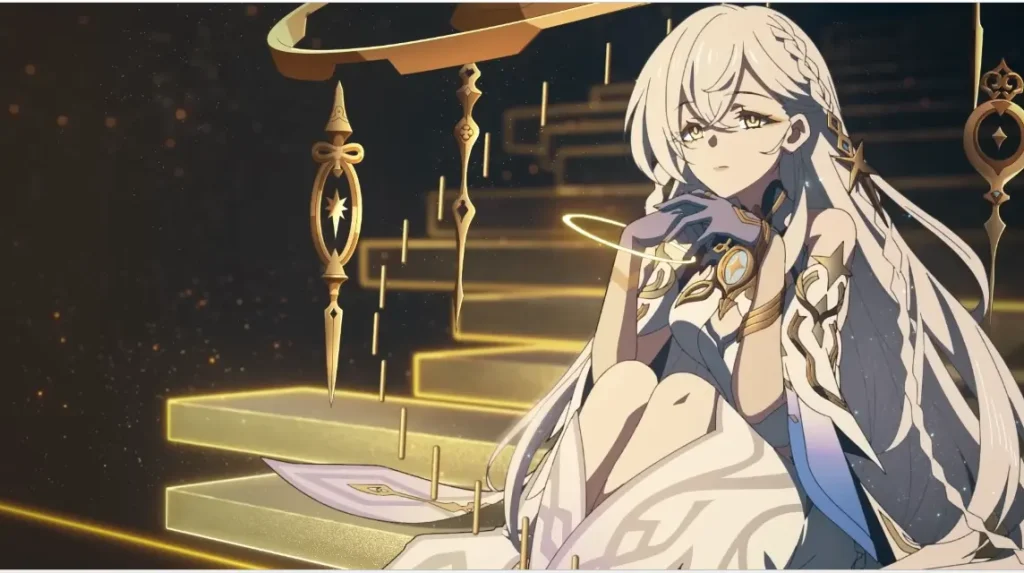
Like the other Shades, Istaroth has the appearance of a tall woman with pale skin, golden eyes, and long white hair that appears to “fade” at the ends.
Her irises resembled a clock without hands, and some of her hair was combed to the right side of her face with a few braids as decoration.
She wore a short white dress with intricate details that was longer in the back and had several cutouts on the back.
She also wears separate white sleeves that fade to blue and gold trim with intricate details on her chest.
Not only that, she also wore short light blue gloves and gold ornaments on her ankles.
He was barefoot, and hovering above him were two large gold rings from which small gold bars and clock-like ornaments seemed to hang.
Evidence of Istaroth's Existence in Various Places
In a time known as “When the Dove Clung to the Branch,” the Heavenly Principles descended upon the world of Teyvat from the sea of stars.
They fought against the Seven Lords for the purpose of creating Four Shadows of themselves, one of which was Istaroth.
40 years after the emergence of the Heavenly Principles, the Seven Sovereigns were defeated and seven nations submitted to their rule. Istaroth may have contributed to the new world created by the Heavenly Principles.
According to Venti, Istaroth began writing the story of the world. To him, all living things were equal, both in value and insignificance. Like an ancient scroll, he engraved in his memory every person, every event, every encounter, and every parting.
He immortalized all people, all events, all meetings and all partings in his memory.
Here is some evidence of its existence in various places in Genshin Impact:
In Monstadt
According to Venti's statement in the event “A Curtain Call for a Colorful Summer Night!”, Istaroth shared some of his power with Sang Barbatos at the Thousand Winds Temple.
Before he was as strong as he is now, Barbatos was originally just an ordinary Anemo spirit who had no powers.
While still in the form of an Anemo spirit, he accidentally met Istaroth.
After hearing his wish, Istaroth entrusted a fragment of his power and authority to Barbatos.
After the fall of Decarabian in Mondo, Barbatos rose to become Anemo Archon.
At the beginning of Mondstadt's reconstruction, the three great clans (Gunnhildr, Imunlaukr, and Lawrence) worshipped Barbatos as well as Istaroth.
The worship itself was carried out on a high cliff, most likely at the Thousand Winds temple.
However, as time went by, Istaroth was forgotten and people believed that Barbatos was the only god in Mondstadt.
Here are some reasons why this happens:
- First, during the corrupt era of the Mondstadt Aristrocracy, the Lawrence Clan suppressed knowledge of Mondstadt's history and destroyed ancient records and relics to cover up their corruption.
- Second, after the fall of the aristocracy, the Mondstadt Library, once the largest in northern Teyvat, shrank to only one-sixth its size after the Great Fire of Fall Equinox.
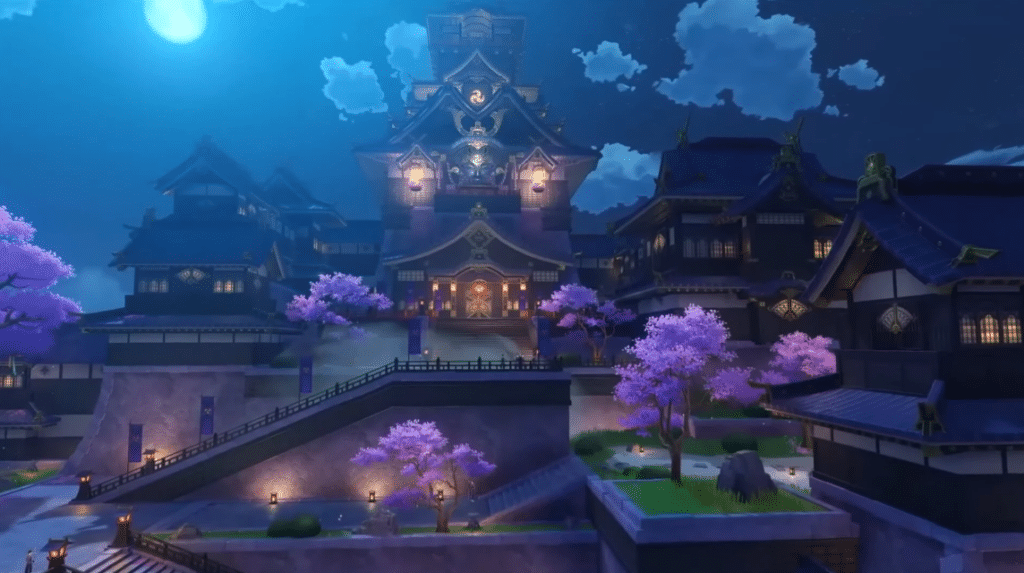
In Inazuma
Ei believes that Istaroth may have helped Makoto, with or without his knowledge, in manipulating time to plant the Sacred Sakura.
Because neither he nor Yae Miko was confident that Makoto would be able to do it alone.
In Enkanomiya
Enkanomiya is an ancient civilization located beneath Watatsumi Island in the land of Inazuma.
Istaroth's story in Enkanomiya is easier to follow because most of it has been compiled in the books Before Sun and Moon and The Byakuyakoku Collection.
After Enkanomiya fell into the sea, their prayers and requests were no longer answered by Heavenly Principle or The Shades.
Only Istaroth responded to them. And Istaroth's power is recognized as one of the essential elements in Enkanomiya, alongside the "water" possessed by the Bathysmal Vishaps.
The scribes at Enkanomiya did not directly mention “Istaroth,” but instead referred to it as “Tokoyo Ookami.”
And if they wanted to write their name, they would write it backwards. This was a sign of their respect for the Goddess.

The people of Enkanomiya practice the Sentou Ritual, a ritual that can banish darkness from the Void Realm by gathering light in the Bokuso Box.
This Light Realm Sigil is used to enhance the Bokuso Box which contains a sign of recognition from Tokoyo Ookami.
This box and ritual only work in Enkanomiya and cannot be brought to Watatsumi Island.
The Legacy of Istaroth and Hope for the Future
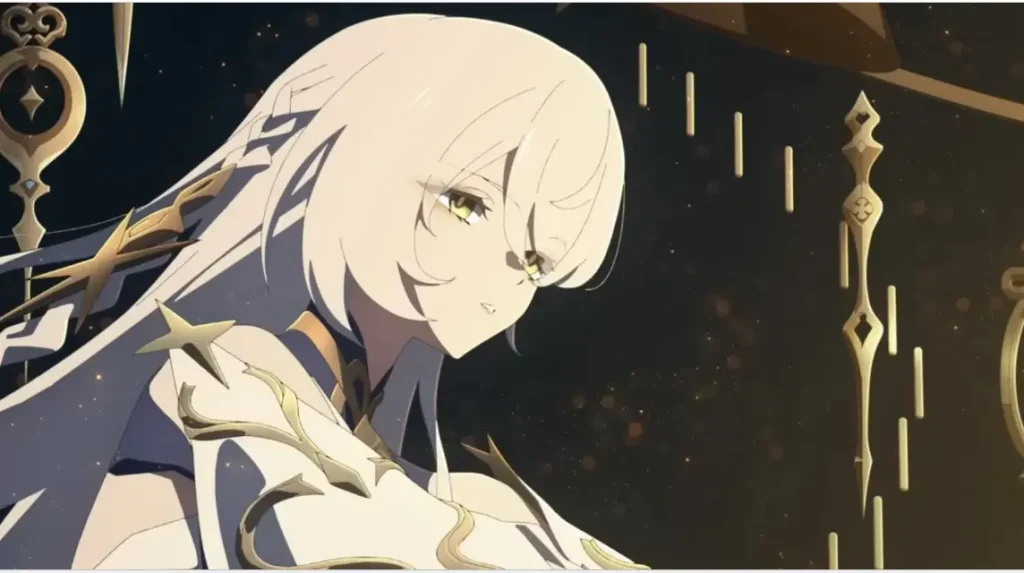
The God of Time's legacy in Mondstadt and Enkanomiya adds depth to the world of Teyvat in Genshin Impact.
Although its existence is often forgotten, its connection to the elements of anemo and time is still felt.
The presence of the Statue of the Omnipresent God on Narukami Island raises new questions about the role of the God of Time in Inazuma.
As a game that will continue to develop, Genshin Impact will likely reveal more mysteries surrounding this God of Time and his role in the story.
New content introduced by HoYoverse it may give us new information that expands our understanding of Teyvat's history and mythology.
While his future may remain a mystery, Genshin Impact players can expect the God of Time's role to continue to evolve as new content is added to their adventures in Teyvat.
Also read:
- New Characters in Genshin Impact Luna Version of Nod-Krai Region
- Nahida Material Genshin Impact: Complete Ascension & Talent Guide
- Moonsign Mechanic Guide in Genshin Impact
So, that's our discussion this time regarding Istaroth in Genshin Impact.
Genshin Impact Product Recommendations
 Donquixoteshop
 RudyStorez
 RudyStorez
 RudyStorez
 RudyStorez
 RudyStorez
 Morishop DiamondDonquixoteshop
 Morishop Diamond
 TopMur



 News
News